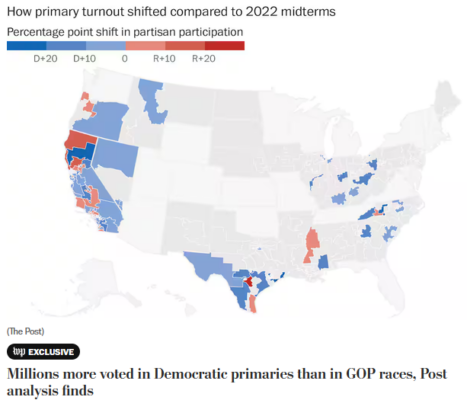
Minnesotans get to do their part for this map on August 11th, Primary Election Day
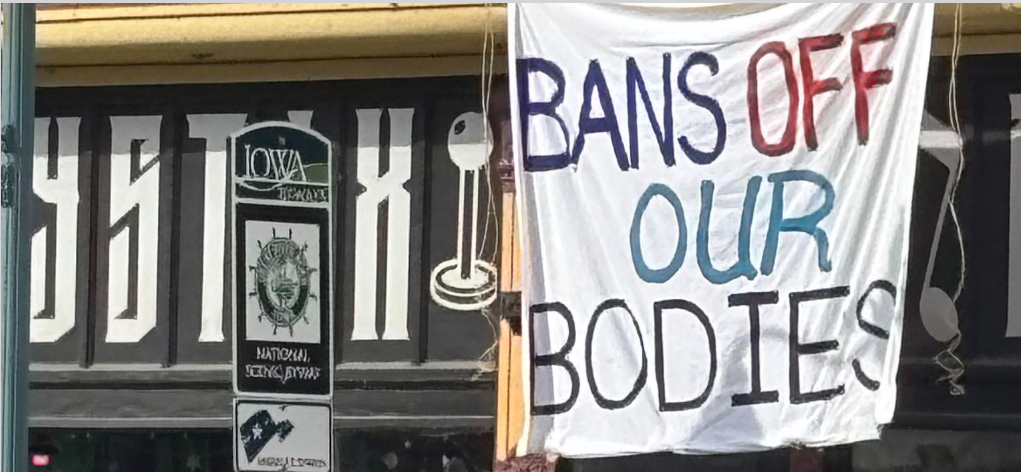
A number of our Ramsey residents showed up at the May 12th city council meeting to oppose three resolutions supported by Mayor Heineman.
On Tuesday night, May 12, the following items appeared on the Ramsey City Council’s meeting agenda, page 3:
4. Adopt Resolution #26-102 Designating the Historic Minnesota State Flag as the Official Flag of the City of Ramsey to Ensure Local Control and Fiscal Responsibility
5. Adopt Resolution #26-108 Expressing Formal Disapproval and Censure of Governor Tim Walz
6. Adopting Resolution #26-111 Authorizing Staff to Explore City’s Ability to File Claim Against Governor Walz and Other State Leaders
Full texts of the resolutions can be found HERE, HERE, AND HERE.
The entire Council meeting can be streamed online at https://qctv.org/show/8/17353/
After the call to order, the first item was to approve the agenda. Chris Riley made a motion to approve with the deletion of the three resolutions described above. It was seconded by Kirsten Buscher. A vote was taken with 4 members—Chris Riley, Kirsten Buscher, Shanna Stewart, and Eric Peters—voting for removal from the agenda. The motion carried, 4-3. You can view the video to hear Mayor Heineman’s defense of the resolutions.
Since many persons attending from the public had come to comment on those three items, those comments were still taken under Citizen Input. Nearly every speaker addressed the issue of the state flag. Some opposed the censure of Governor Walz and the exploration of Ramsey’s ability to file claims against him and other state leaders. There was no explicit verbal support for those two resolutions.
Those who wanted to return to the old flag argued that it was tradition; the images were (they thought) racially inclusive because there is after all a native pictured on the flag; the flag was created by a small group of Democrats without input from anyone else (false); they had no idea that this would happen without the approval of all voters; and many wanted the issue put on the ballot. There were also some opinions about how “ugly” the new flag was, among others.
Those in support of the new state flag explained, it was not the only previous flag—there had been changes in the past; a new flag wasn’t a new idea—it had been discussed for decades; the historical significance of the old imagery was anything but racially inclusive and clearly showed the expulsion of many tribes from the state; the current action to redesign the flag began in the state legislature in 2022, if not earlier, and was no secret; laws were passed to create a large commission of people representing all points of view; designs for the new state flag (and seal) were gathered through a public competition with thousands of entries from state; these entries were consolidated into six designs and voted on by the entire legislature. The new flag has the symbolism of the North Star (very similar to the flag of Texas with its lone star) and an abstract outline of Minnesota. It has three distinct colors and is easy to recognize. Modern flags do not use busy images that are hard to recognize for aesthetic reasons. But the main point was that this process proceeded publicly for years and could not be called a surprise.
The Star Tribune published on May 12 an opinion piece by a guest contributor about these three resolutions that addresses the other two issues in more detail.
Today, Amy Klobuchar has announced on Facebook her policy platform for her gubernatorial campaign. We reproduce the entire document below. She covers in depth plans to prevent and root out fraud. Other topics include simpler health care applications, lower drug prices, increased housing availability (both buying and renting), impose reviews of state programs on a regular schedule, and create more efficient online services for small businesses and the permit applications.
Amy says: “Fixing the government is the foundation for everything else. And there’s more to come. Together, we can get it done.”
Loading Viewer...
Minnesota State Sen. Torrey Westrom (R-Alexandria) says the Hennepin County Medical Center, a publicly funded hospital in Minneapolis, shouldn’t get $50 million to counteract federal budget cuts and avoid shutting down because “go woke, go broke.” “Let’s give them tough love. Tough medicine that doesn’t taste great, but it’s gonna help cure their disease…”
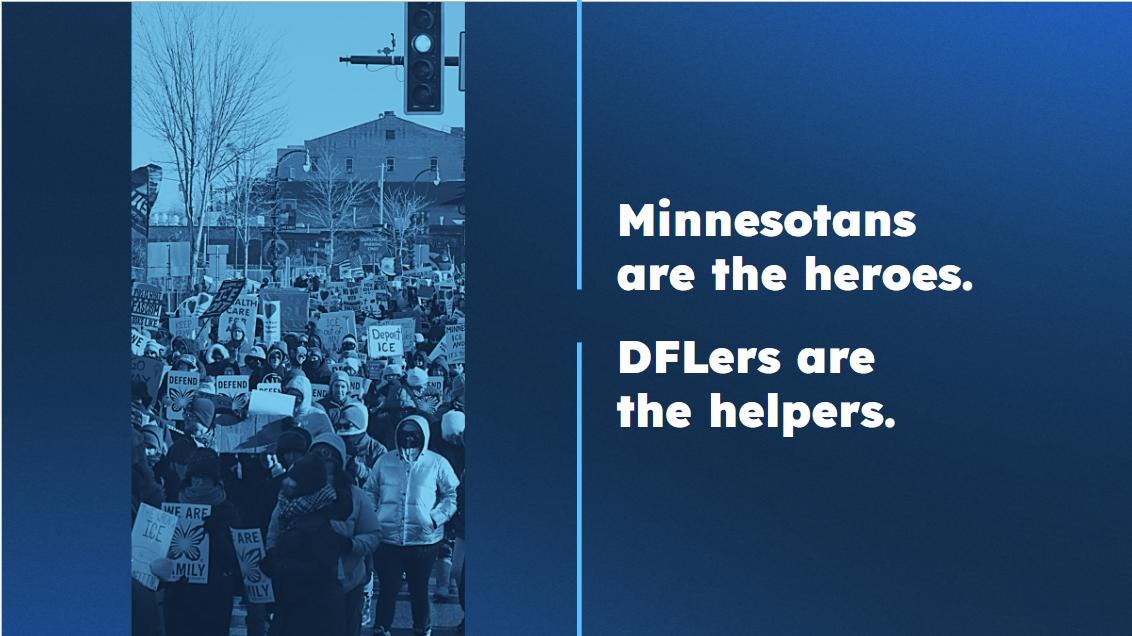
Seven Minnesota safety net hospitals are at risk of closing because of federal Medicaid cuts. Minnesotans rallied to protect care. DFLers are doing the work to keep these doors open.
[March 7, 2026] Democratic Representatives Greg Landsman of Ohio, Jared Golden of Maine, Henry Cuellar of Texas, and Juan Vargas of California all voted with Republicans to defeat the War Powers Act vote in the House. Had these Democrats voted with their party, the resolution would have passed 216-215.
[Posted 3/5/2026] U.S. Rep. Angie Craig, who voted for a punitive immigration bill last year called the Laken Riley Act, reversed herself Monday, writing in a Star Tribune commentary that she regrets her “yes” vote.
Craig represents the 2nd Congressional District and is currently running in the Democratic primary for retiring Tina Smith’s U.S. Senate seat. Her strongest opponent, Lt. Gov. Peggy Flanagan, has repeatedly criticized Craig for her vote. The Laken Riley Act was named after a nursing student at Augusta University, murdered in 2024 by an undocumented immigrant, José Antonio Ibarra, a 26-year-old Venezuelan. Ibarra was convicted and sentenced to life without possibility of parole.
The Laken Riley Act was the first law signed by Donald Trump, and it became his rallying cry for a severe crackdown on immigrants both entering and living in the U.S. Primarily, the Laken Riley Act requires the mandatory federal detention of any non-U.S. national who is unlawfully present and has been arrested for, charged with, or convicted of specific offenses: any theft-related crimes, the assault of law enforcement, and crimes causing serious harm (whether or not intended). Furthermore, states are given broad powers to sue to the federal government over immigration decisions.
Current defense actions involve questioning Ibarra’s mental competency and understanding of English and American legal procedure when he waived his right to a jury trial.