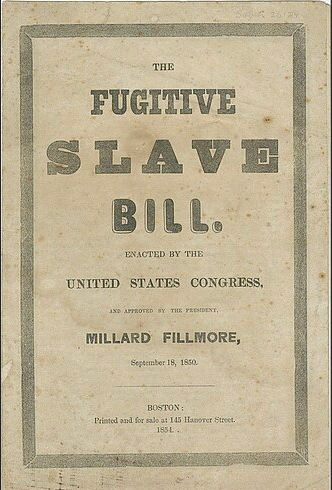
THE FUGITIVE SLAVE BILL, 1854
This printing of the Fugitive Slave Bill was sponsored by anti-slavery groups as a protest against the new law that required local and state authorities to assist slave owners in retrieving slaves. National Museum of African American History and Culture; Collection of the Smithsonian National Museum of African American History and Culture, published by the American Anti-Slavery Society. {{PD-US}} – US work that is in the public domain in the US for an unspecified reason, but presumably because it was published in the US before 1930.
Rewriting History and Culture in Our Museums
The Trump administration has attacked the Smithsonian museums and their exhibits for presenting America in a “negative light,” promoting “wokeism,” making Americans feel bad about their country, or for simply dwelling on “unpleasant” subjects, such as slavery, immigrants, gender — or even empowered women. There is mounting fear that some current exhibits and their related records will be destroyed due to pressure from the White House.
Earlier this year, when the National Park Service was required to remove all public signage that the administration found objectionable, park staff asked visitors to use their cameras to photograph all the signage before much of it was taken down and destroyed. Park visitors responded enthusiastically, and a thorough photographic record was taken and is being curated.
Regarding the Smithsonian museums, it was August 12th when the White House published a list of “objectionable” displayed works, claiming these promoted divisive narratives. Volunteer “citizen historians” are now photographing for the historic record many artworks and exhibits addressing race, immigration, and sexuality before they may be altered.
Pressure was felt even earlier as special exhibition plans were discarded (artist Amy Sherald’s canceled exhibition of her painting depicting a transgender woman resembling the Statue of Liberty) and existing exhibits were altered (references to Trump’s two impeachments removed but later revised and returned to the display in a less prominent position).
The administration justified its review of the public content in eight Smithsonian museums as an alignment of museum content with Trump’s cultural directives made in preparation for the United States’ 250th Anniversary.
Artists and museum professionals are worried. They see the restrictions soon extending to other museums and galleries, as well to theaters and performances of all kinds — not just in the art world but including other cultural and historical institutions providing public entertainment and education.
The artists have had mixed feelings about being targeted; some view it as a badge of honor, while others fear it may lead to self-censorship in the artistic community. Ibram X. Kendi, a prominent scholar on racism, fears that political censorship will harm serious scholarship on racism.
